
Spinal Decompression Therapy in Chelmsford
Spinal Decompression
Advanced Non-Surgical Treatment in Chelmsford for Disc Pain, Slipped Discs, Sciatica, Nerve-Related Pain and Persistent Back or Neck Pain.
Persistent back pain, neck pain or sciatica can make everyday activities feel increasingly difficult. You may struggle to sit at work, drive, sleep comfortably, exercise or spend time with your family without constantly thinking about your symptoms.
At VITAL Health Chelmsford, we offer Advanced Spinal Decompression Therapy using the Spine MT ATLAS system.
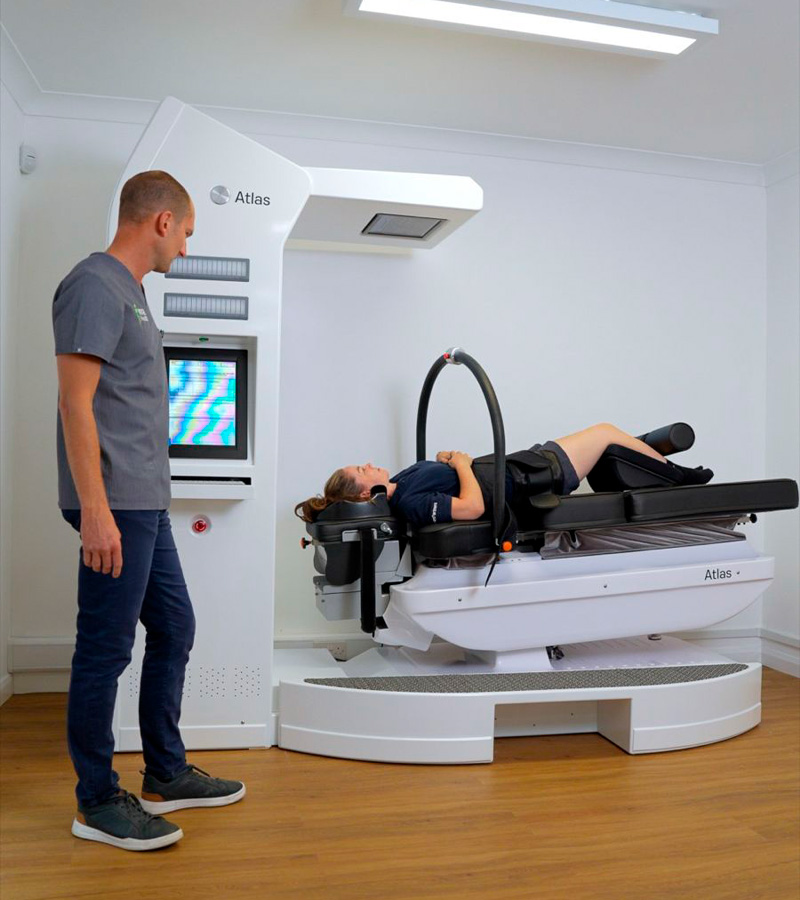
This computer-controlled treatment applies gentle, carefully monitored decompression to selected areas of the spine. It also incorporates controlled mobilisation, rotation and lateral movement according to the individual’s assessment and clinical needs.
Spinal decompression may be considered for suitable people experiencing symptoms associated with a slipped or herniated disc, sciatica, disc degeneration or irritation of a spinal nerve.
NO SURGERY | NO NEEDLES | NO STRESS | NO LONG RECOVERY | NO FEAR OF MAKING THINGS WORSE
SPINAL DECOMPRESSION THERAPY
What Is Spinal Decompression Therapy?
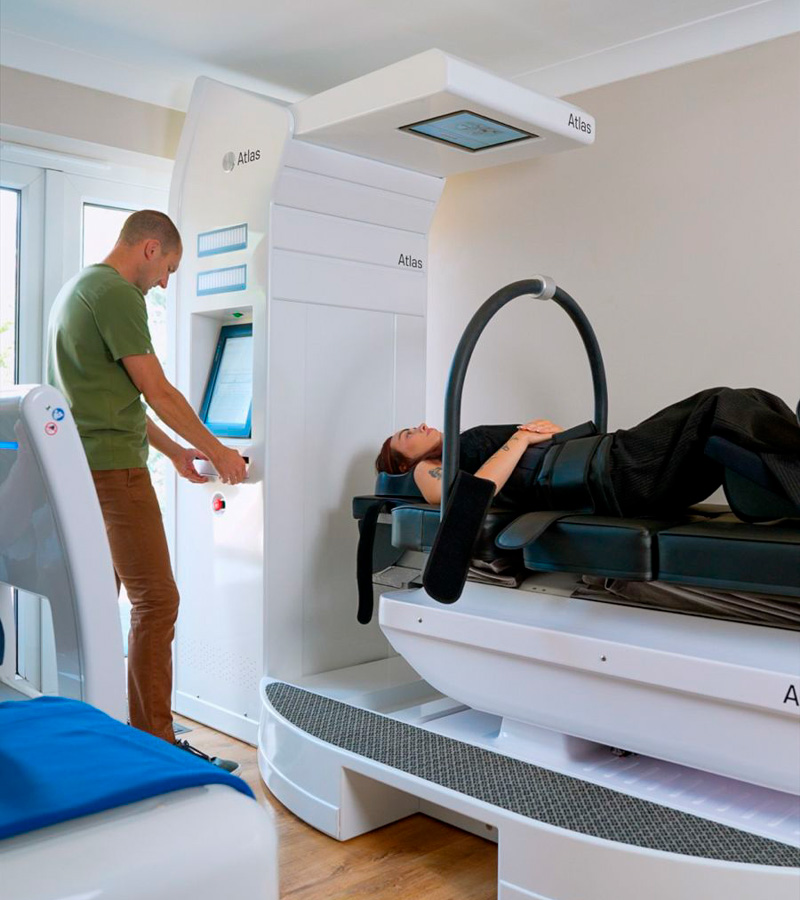
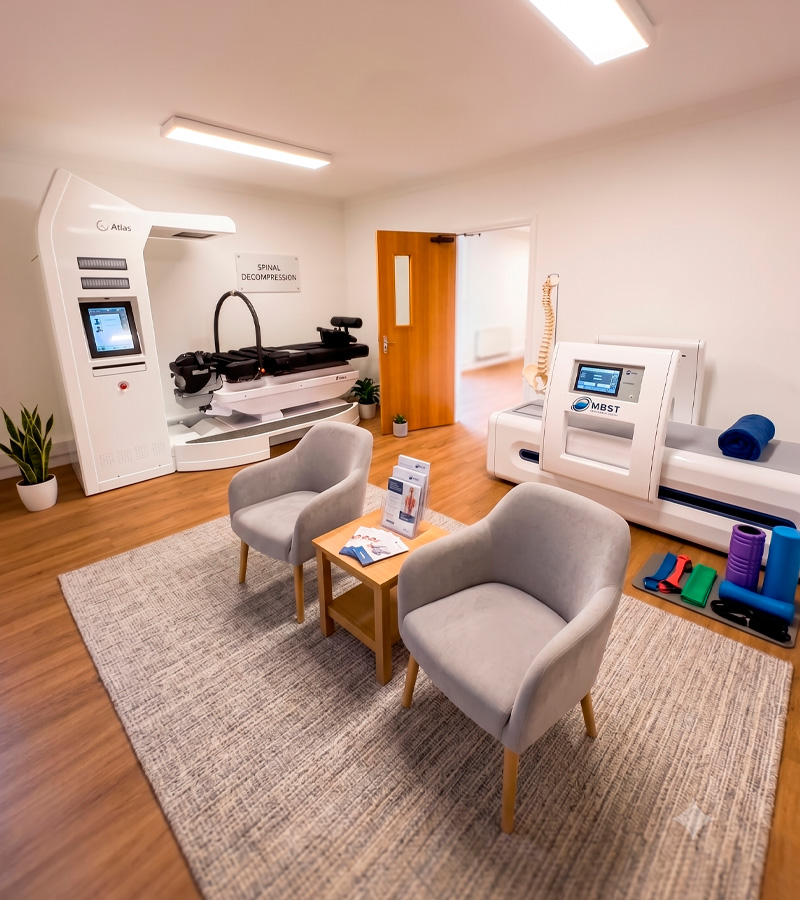
Spinal decompression is a non-surgical treatment delivered on a specialist motorised table. The system allows a practitioner to apply gentle, progressive decompressive forces while controlling the angle, position, movement and area of the spine being addressed.
The Spine MT ATLAS can target different regions, including:
- The cervical spine in the neck
- The thoracic spine through the mid-back
- The lumbar spine in the lower back
- The sacral and pelvic region
Not every spinal problem occurs in a perfectly straight line. Your symptoms may be affected by bending, rotation, sitting, standing or movement to one side. A disc protrusion or joint restriction can also vary in position and direction.
The Spine MT ATLAS provides three-axis control, allowing your practitioner to combine decompression with specific positioning and movement.
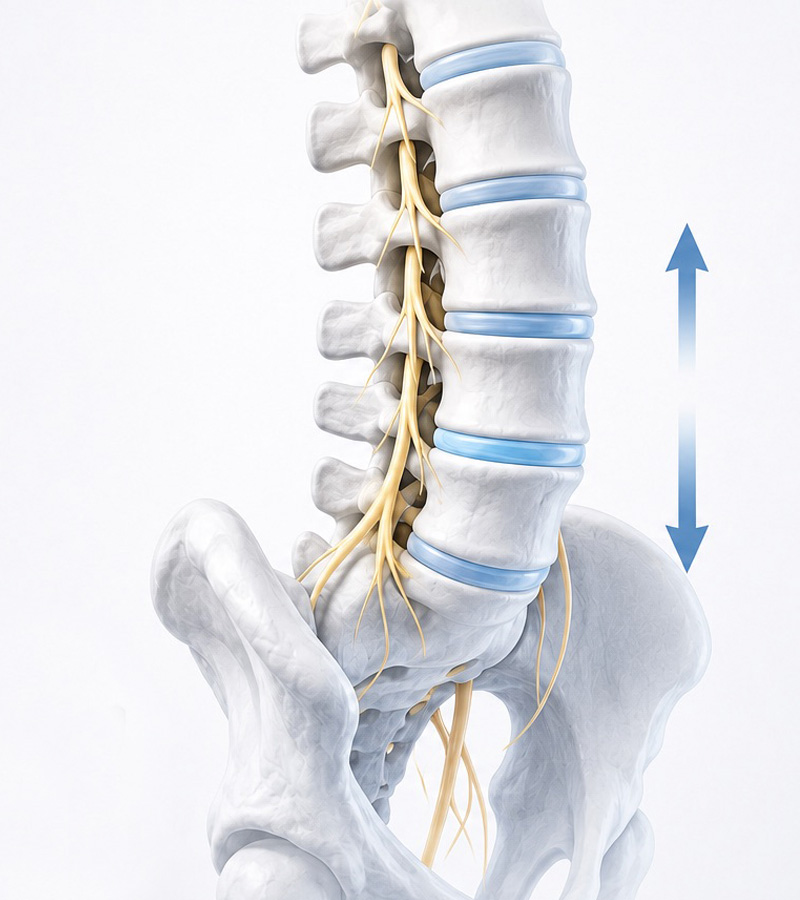
The objective is to provide a comfortable and carefully monitored mechanical treatment that reduces loading around a targeted spinal region and supports improved movement.
DISC-RELATED PAIN
Are Disc or Nerve Symptoms Limiting Your Life?
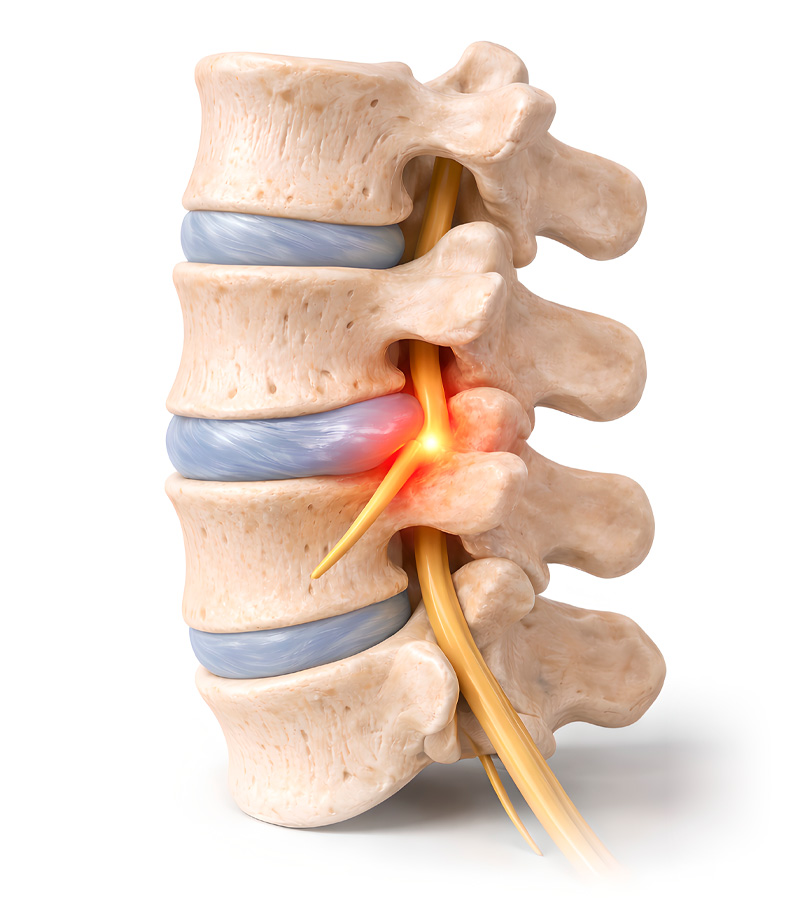
Disc-related symptoms do not always remain in one part of the back or neck. Irritation around a spinal nerve can sometimes lead to symptoms travelling into an arm or leg. This may include pain, tingling, numbness, altered sensation or, in some cases, weakness.
You may be searching for help because you experience:
- Lower back pain that keeps returning
- Sciatica or pain travelling down one leg
- Tingling or numbness in the foot
- Pain that becomes worse when sitting
- Difficulty bending, lifting or getting out of a chair
- Neck pain that travels into the shoulder or arm
- Pins and needles in the hand or fingers
- Symptoms associated with a diagnosed disc bulge
- Repeated flare-ups despite previous treatment
- Pain that is disrupting sleep, work or exercise
- Concern about a slipped, prolapsed or herniated disc
“There are many possible causes of these symptoms. Spinal decompression is therefore only recommended after an individual assessment has identified that it may be clinically appropriate.”
WHAT CAN IT HELP WITH?
What Problems Can Be Assessed for Spinal Decompression Therapy?
Slipped, Bulging and Herniated Discs
ATLAS spinal decompression may be considered when a disc-related problem is thought to be contributing to persistent back or neck pain, nerve irritation or restricted movement.
Treatment is only recommended after assessment, and not every disc finding requires treatment.
Sciatica and Leg Pain
Sciatica can cause pain, tingling, numbness or altered sensation that travels from the lower back or buttock into the thigh, calf or foot.
Where symptoms appear to relate to irritation of a lumbar nerve, spinal decompression may be one option considered as part of a wider management plan.
Cervical Disc and Arm Symptoms
A disc or joint problem in the neck may irritate a nerve supplying the shoulder, arm or hand.
Symptoms can include neck pain, arm pain, pins and needles, numbness or changes in grip and strength. Progressive weakness or significant neurological changes require prompt medical assessment.
Persistent Lower Back Pain
Long-term lower back pain can have several contributing factors. ATLAS may be considered when assessment suggests that disc loading, joint restriction or nerve irritation is relevant to the person’s symptoms.
Degenerative Disc Disease
Age-related disc changes are common and do not always cause pain.
When degenerative changes are associated with stiffness, recurring discomfort or reduced function, spinal decompression may form one part of an individualised care plan.
Spinal Stenosis
Spinal stenosis is a narrowing around the spinal canal or nerve openings. Some presentations may be considered for conservative management, while others require specialist medical assessment.
Suitability depends on the location, cause and severity of the narrowing as well as the person’s symptoms and general health.
Is Spinal Decompression right for you?
Spinal decompression isn’t appropriate for every person with back pain. And that’s an important distinction.
We don’t recommend it simply because someone has pain or because an MRI report mentions a disc bulge.
Your symptoms, clinical findings, health history and overall presentation will all be considered.
You may wish to arrange a free call if:
Persistent or recurring back pain
Diagnosed bulging or herniated disc
Sciatica or pain travelling into the leg
Neck pain travelling into the arm
Intermittent tingling or numbness
Pain aggravated by sitting or driving
Symptoms affecting work or sleep
Limited results from previous treatment
Looking for a non-invasive option
A more structured approach to treatment
Start with a FREE Spinal Decompression Suitability Call
Speak with our Chelmsford clinic team about your symptoms, any diagnosis or scans you have received and the problems you are experiencing.
There is no obligation to proceed with treatment.
Spinal Decompression Therapy is commonly used with people who have perhaps reached a stage where they feel they have run out of options. Founder and Osteopath Dan Trussler says:
“Many patients come to our Chelmsford clinic frustrated because their pain keeps returning or hasn’t settled despite doing the right things. Spinal Decompression Therapy allows us to work directly at the affected spinal level in a precise, measurable way. It helps us support healing while guiding patients back to strength and confidence in movement.”
HOW IT WORKS
How Does Spinal Decompression Work?
Using slow, computer-controlled movements, it gently mobilises and stretches the spine and decompresses the discs in your lower back to help reduce pressure on the affected disc and nearby nerve.
The changes in pressure may also help fluid and nutrients move into the disc, supporting its natural recovery.
The system can apply a gentle and progressive decompressive force while controlling the position and movement of the spine. Its three-dimensional approach allows decompression to be combined with carefully selected rotation, mobilisation or lateral flexion where clinically appropriate.
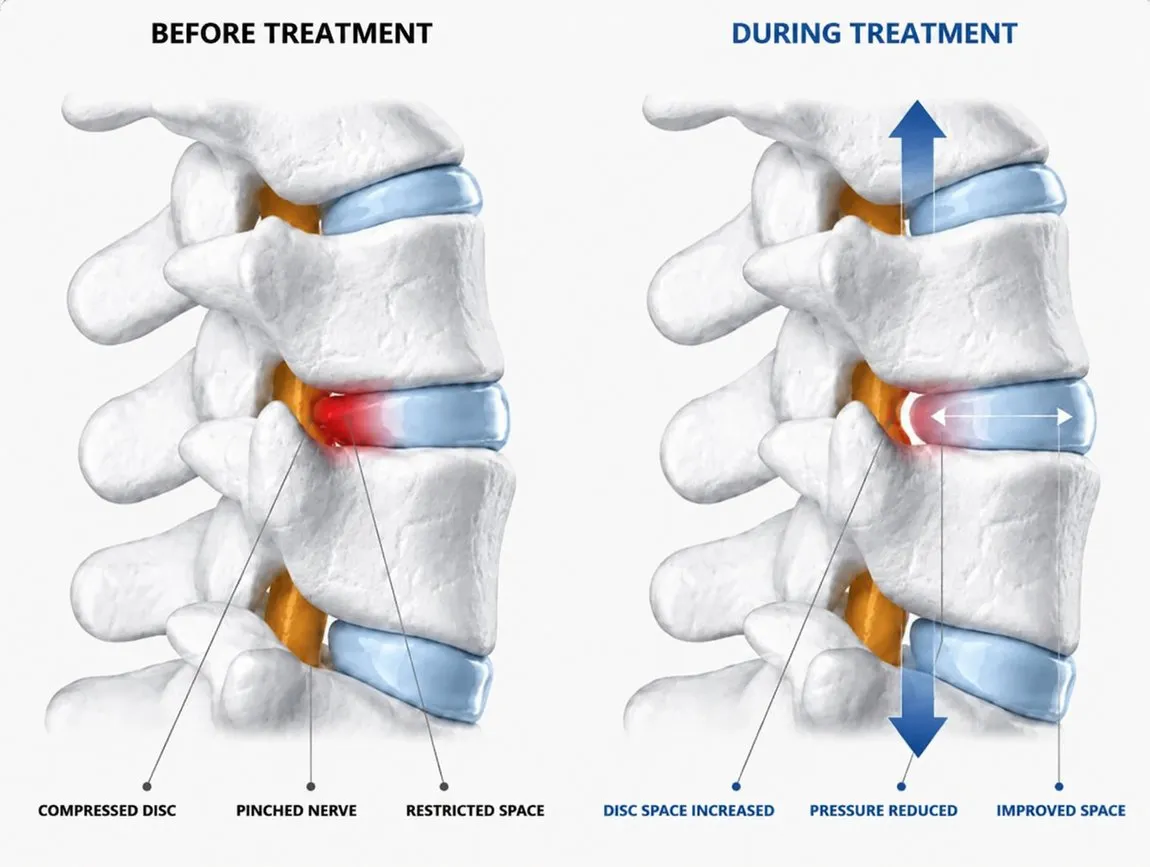
The purpose is to reduce mechanical loading around a targeted area and encourage more comfortable spinal movement.
Treatment settings can be progressively adjusted as your body adapts. The system also provides live treatment information, allowing your practitioner to monitor each session and maintain consistent, controlled parameters.
The aim is simple: reduce pressure, ease pain and help you move more comfortably again. For some people, that means walking more comfortably, sitting for longer, or getting back to the activities they love.
Unlike basic traction systems, the ATLAS system at our Chelmsford Clinic allows your practitioner to alter the direction, angle, and movement of the treatment.
This can include combinations of:
Decompression
Controlled mechanical forces applied to a targeted spinal region.
Rotation
Carefully selected rotational positioning where clinically appropriate.
Lateral Flexion
Controlled movement or positioning from side to side.
Mobilisation
Different mobilisation programmes can be incorporated according to the individual’s presentation.
Cervical or Lumbar Positioning
Treatment angles can be modified depending upon whether the neck or lower spine is being treated.
Throughout your programme, treatment can be progressively modified according to your comfort and response.
WHAT TO EXPECT
What Your Spinal Decompression Therapy Assessment & Treatment Plan Includes
We want you to understand what is happening and why we’re recommending a particular approach. That’s why your treatment journey doesn’t simply start by putting you onto the ATLAS machine.
All patients first undergo an initial phone assessment to determine initial suitability for the treatment.
Then you will be invited into the Chelmsford clinic for a more comprehensive physical assessment; clinical presentation and neurological status are considered when assessing someone’s suitability for treatment.
Free Suitability Call
Your first step is a FREE suitability call with the VITAL Health Chelmsford team. We’ll discuss your symptoms, how long you’ve been experiencing them, any diagnosis or scans you’ve had, and treatments you may have already tried. We’ll then explain how spinal decompression works and whether an in-clinic assessment could be a suitable next step, with no obligation to proceed.
Detailed history and orthopaedic / neurological examination
We begin by understanding your full health history, current symptoms, and how your condition is affecting your daily life. Your practitioner will carry out a thorough physical examination to assess movement, strength, reflexes, nerve function and identify the spinal structures most likely contributing to your pain.

Review of MRI or other imaging where available
If you’ve previously had an MRI scan, X-rays or specialist imaging, we’ll carefully review the findings as part of your assessment. This helps us better understand issues such as disc bulges, herniation, degeneration or nerve compression and determine whether Spinal Decompression Therapy is appropriate for you.
Individualised Spinal Decompression Therapy Plan
No two spinal conditions are the same. Your treatment plan is tailored to your specific diagnosis, symptoms, spinal level involvement and overall health goals. We create a structured programme designed to target the affected area while supporting long-term recovery.
Treatment sessions last 30 minutes.
Progressive adjustment of treatment parameters
As your body begins to adapt and improve, your treatment settings are carefully adjusted throughout your programme. This ensures your care progresses safely and effectively while continuing to challenge the spinal structures in a controlled way.
Ongoing outcome monitoring
We closely track your pain levels, mobility, function and overall progress throughout your programme. Regular reviews help us ensure you’re responding well to treatment and allow us to make adjustments where needed to help you achieve the best possible outcome.
We’ll provide you with clear answers, realistic expectations and a plan that fits your condition and goals.
FOCUSED ON BEST OUTCOMES
A Combined-care Approach
At VITAL Health Chelmsford, your care does not need to rely on one treatment in isolation.
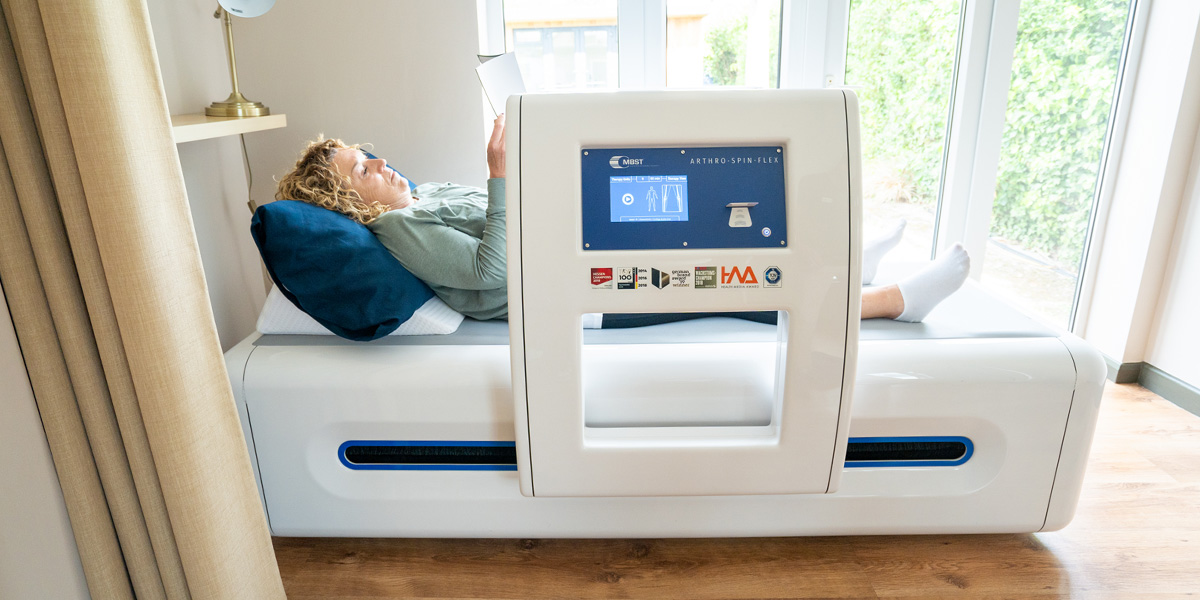
For some suitable patients, the clinical team may recommend combining Spinal Decompression with MBST Therapy as part of a personalised treatment programme.
The two treatments take different approaches:
• Spinal Decompression applies carefully controlled decompression and mobilisation to a targeted area of the spine.
• MBST Therapy uses therapeutic magnetic resonance technology and may be considered as part of the management of certain musculoskeletal and degenerative conditions.
Where clinically appropriate, these treatments may be used alongside one another to provide a broader approach to managing disc-related pain, restricted movement and associated symptoms.
This does not mean that every patient will require both treatments. Your practitioner will consider your symptoms, examination findings, medical history, available imaging and response to care before making any recommendation.
Your programme may also include rehabilitation exercises, physiotherapy, osteopathy, chiropractic, movement advice or other appropriate support.
Book Your Spinal Decompression Therapy Suitability Call
VITAL Health Chelmsford
Unit 3, the old coal yard,
Little Waltham Rd,
Broomfield, Chelmsford
CM1 7TG
01245 259097
Clinic Hours:
Monday 08:00 – 20:00
Tuesday 08:00 – 20:00
Wednesday 08:00 – 20:00
Thursday 08:00 – 20:00
Friday 08:00 – 20:00
Saturday 08:00 – 20:00
Sunday 10:00 – 16:00
OUR CLINIC
Our Chelmsford Spine & Disc Centre
VITAL Health Chelmsford
Unit 3, the old coal yard,
Little Waltham Rd,
Broomfield, Chelmsford
CM1 7TG
Spinal Decompression FAQs
Here are some answers to common questions we get asked at our Chelmsford Clinic.
Where can I receive spinal decompression therapy in Chelmsford?
VITAL Health provides ATLAS spinal decompression at its Chelmsford clinic. Treatment is available following a suitability call and appropriate clinical assessment.
What is the Spine MT ATLAS?
The Spine MT ATLAS is an advanced spinal decompression and mobilisation system. It can provide individually adjusted decompression to different spinal regions and combine it with controlled rotation or lateral movement where clinically appropriate.
What is spinal decompression used for?
It may be considered for suitable people experiencing symptoms associated with disc-related back or neck pain, sciatica, spinal nerve irritation, degenerative disc changes or certain movement restrictions.
Does spinal decompression cure a slipped disc?
No treatment can guarantee that it will cure a slipped disc. ATLAS is a conservative treatment option that may be considered for certain disc-related presentations after an assessment.
Is a slipped disc the same as a herniated disc?
“Slipped disc” is a commonly used non-medical description. It often refers to a disc bulge, protrusion, prolapse or herniation. The disc does not literally slip out of place.
Can Spinal Decompression help sciatica?
Spinal Decompression Therapy may be considered when sciatic symptoms appear to be associated with irritation of a spinal nerve. Sciatica can have different causes, so a clinical assessment is needed.
Can it be used for a neck disc problem?
Yes, the system can deliver cervical decompression. Whether it is appropriate depends on your symptoms, examination findings, medical history and any relevant imaging.
Is treatment painful?
Spinal decompression is designed to be gentle and progressive. Treatment settings can be adjusted to your tolerance. Individual experiences vary, and you should report any discomfort or symptom changes immediately.
What should I wear?
Comfortable clothing that allows you to lie and move easily is generally most appropriate. The clinic team can provide specific advice before your appointment.
Do I need a referral from my GP?
You can usually contact VITAL Health directly. However, some symptoms or medical histories may require GP, consultant or surgical input before treatment is considered.
Do I need an MRI?
Not necessarily. Existing MRI scans can be helpful where a disc or nerve-related condition has been identified. Your practitioner will advise whether imaging or further medical investigation is recommended.
How many treatments are required?
There is no single programme that suits everyone. The recommended number and frequency of sessions will depend on your assessment, symptoms, goals and response.
Can I have treatment after spinal surgery?
Previous surgery does not automatically exclude treatment, but the type and date of surgery, spinal stability and any implanted hardware must be reviewed carefully. Medical clearance may be required.
What is included in the free call?
The call allows you to describe your symptoms and ask general questions. Our team can explain whether an assessment may be worthwhile, but the call is not a substitute for examination and cannot provide a formal diagnosis.