
Slipped Disc Treatment Tiptree | VITAL Health
Spinal Decompression
Non-Surgical Treatment for Disc Pain, Slipped Discs, Sciatica and Persistent Back or Neck Pain.
Living with a slipped disc, bulging disc or nerve-related pain can affect almost every part of your day. Sitting, walking, sleeping, working and exercising may all become uncomfortable, particularly when symptoms keep returning despite rest, medication or previous treatment.
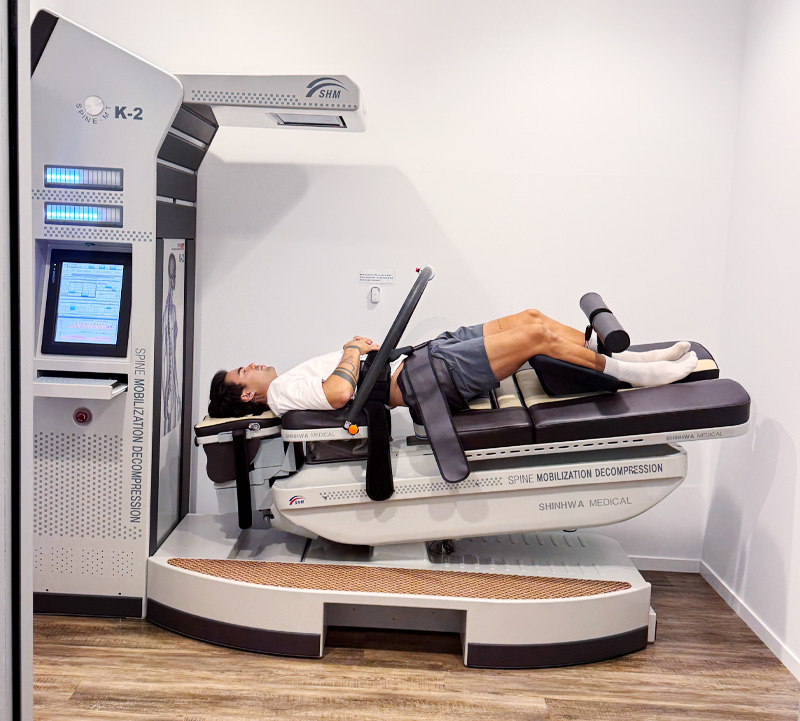
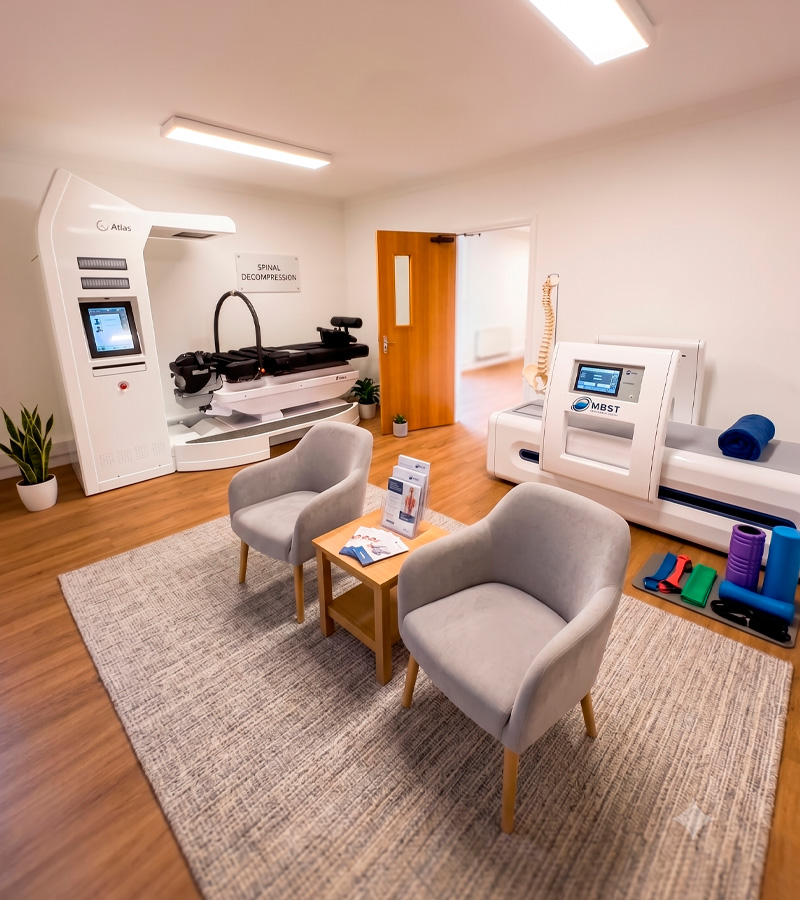
At VITAL Health in Tiptree, we provide advanced spinal decompression therapy using the Spine MT ATLAS system. This non-invasive treatment is designed to apply gentle, controlled decompression and mobilisation to specific areas of the spine.
Your care begins with a free suitability call with our team. We will listen to what has been happening, explain how spinal decompression works and discuss whether an in-clinic assessment may be an appropriate next step.
NO SURGERY | NO NEEDLES | NO STRESS | NO LONG RECOVERY | NO FEAR OF MAKING THINGS WORSE
SPINAL DECOMPRESSION THERAPY
What Is Spinal Decompression Therapy?
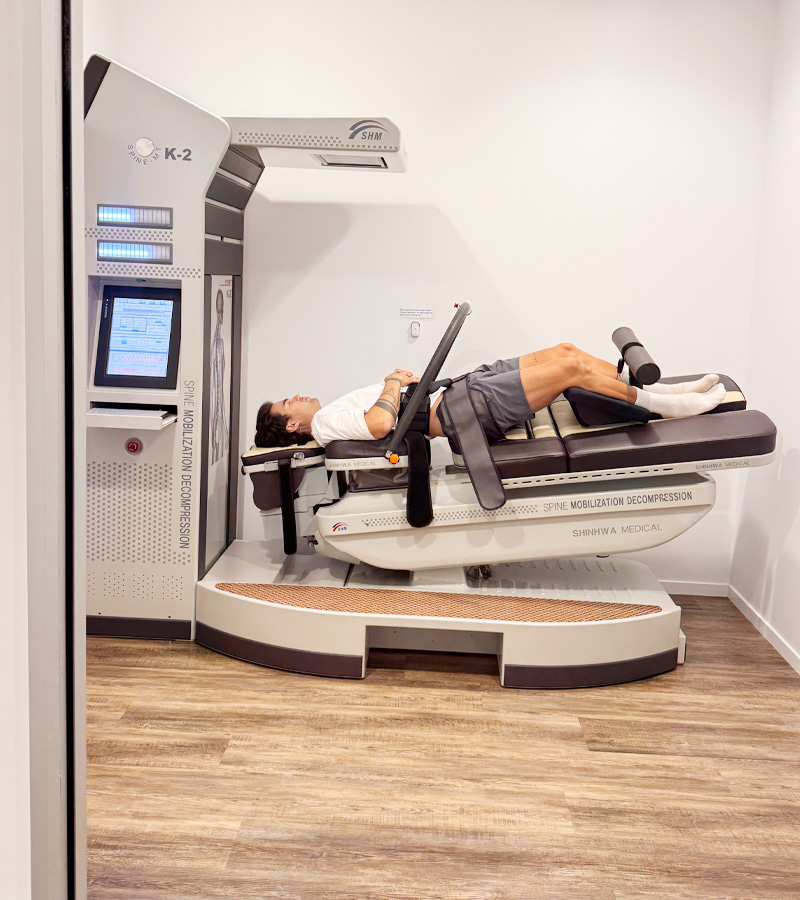
Spinal decompression therapy is a non-surgical treatment that uses a specialist motorised table to apply carefully controlled forces to the spine.
At VITAL Health, treatment is delivered using the Spine MT ATLAS, an advanced system capable of combining decompression with targeted mobilisation, rotation and lateral movement.
Rather than applying the same general pulling force to everyone, the system allows your practitioner to select and adjust treatment settings according to:
- The area of your spine being treated
- Your symptoms and examination findings
- Your comfort and tolerance
- The direction and location of your movement restriction
- Your response to previous sessions
- The stage of your treatment programme
Treatment can be directed towards the neck or lower back, depending on your clinical needs.
DISC-RELATED PAIN
Could Your Pain Be Coming From a Spinal Disc?
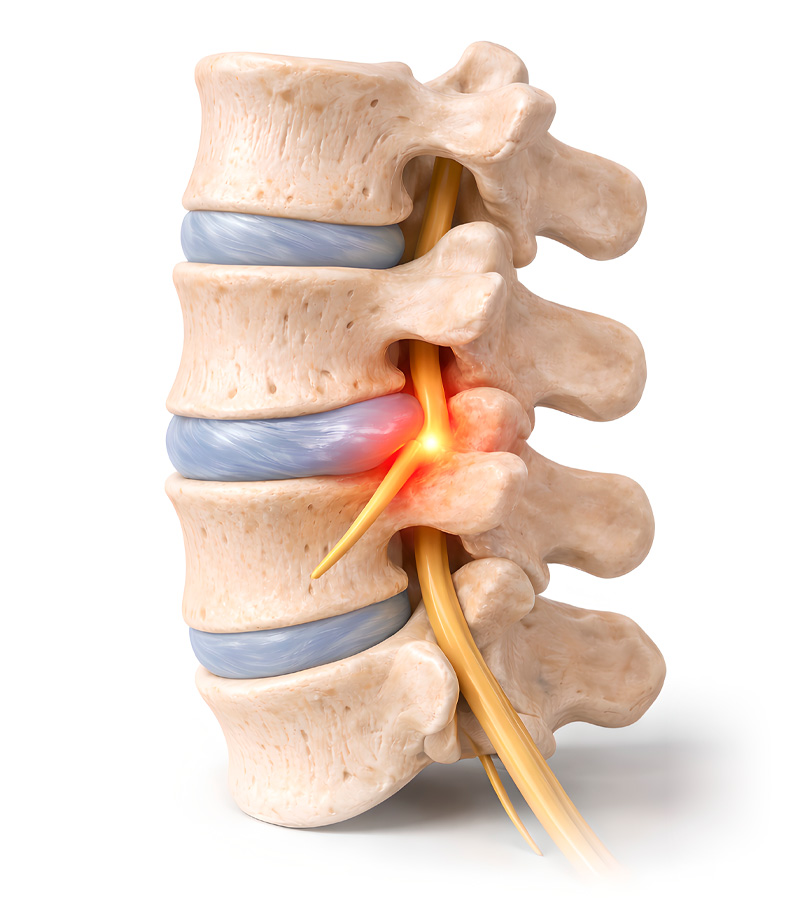
The discs between the bones of your spine act as cushions and help the spine move comfortably. Changes to a disc can sometimes irritate nearby joints or nerves, leading to pain in the back or neck as well as symptoms that travel into an arm or leg.
You may have heard terms such as:
- Slipped disc
- Bulging disc
- Herniated disc
- Prolapsed disc
- Disc protrusion
- Degenerative disc disease
- Trapped or compressed nerve
- Sciatica
- Cervical radiculopathy
- Lumbar radiculopathy
Spinal decompression will not be suitable for every person or every type of back or neck pain. That is why we assess each case individually before recommending treatment.
HOW IT WORKS
How Does Spinal Decompression Work?
Using slow, computer-controlled movements, it gently mobilises and stretches the spine and decompresses the discs in your lower back to help reduce pressure on the affected disc and nearby nerve.
The changes in pressure may also help fluid and nutrients move into the disc, supporting its natural recovery.
The system can apply a gentle and progressive decompressive force while controlling the position and movement of the spine. Its three-dimensional approach allows decompression to be combined with carefully selected rotation, mobilisation or lateral flexion where clinically appropriate.
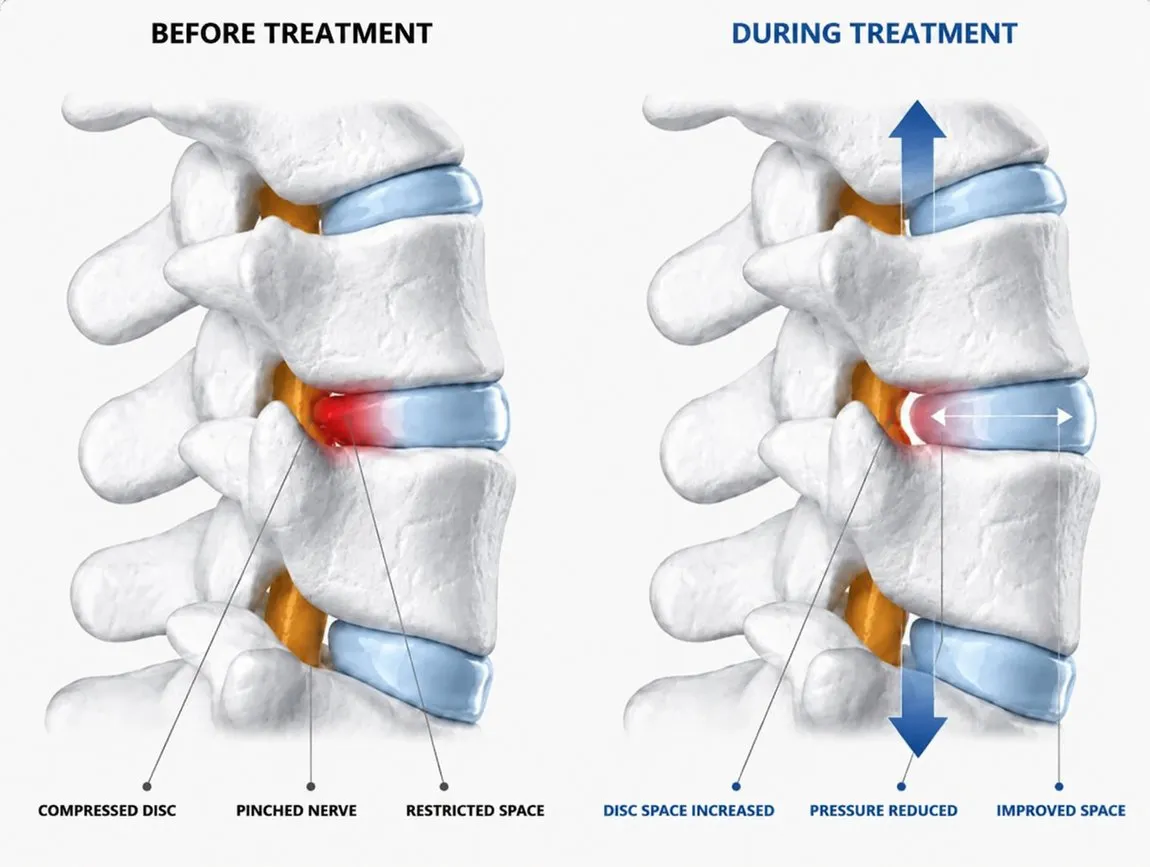
The purpose is to reduce mechanical loading around a targeted area and encourage more comfortable spinal movement.
Treatment settings can be progressively adjusted as your body adapts. The system also provides live treatment information, allowing your practitioner to monitor each session and maintain consistent, controlled parameters.
The aim is simple: reduce pressure, ease pain and help you move more comfortably again. For some people, that means walking more comfortably, sitting for longer, or getting back to the activities they love.
Is spinal decompression right for you?
Spinal decompression tends to help most when pain is coming from pressure on an irritated disc or nerve. It isn’t right for everyone; an assessment is how we find out whether it’s likely to help you.
• Sciatica caused by a disc bulge or disc prolapse
• Disc-related back pain that travels into the leg
• A pinched nerve causing shooting pain, tingling or numbness
• Back pain or neck pain that hasn’t improved with physio, chiropractic or osteopath treatment
• Wanting to explore a non-surgical option
If we don’t believe spinal decompression is the right treatment for you, we’ll explain why and discuss alternative options that are most appropriate.
Spinal Decompression Therapy is commonly used with people who have perhaps reached a stage where they feel they have run out of options. Founder and Osteopath Dan Trussler says:
“Many patients come to us frustrated because their pain keeps returning or hasn’t settled despite doing the right things. Spinal Decompression Therapy allows us to work directly at the affected spinal level in a precise, measurable way. It helps us support healing while guiding patients back to strength and confidence in movement.”
WHAT TO EXPECT
What Your Spinal Decompression Therapy Assessment & Treatment Plan Includes
All patients undergo an initial phone assessment to determine initial suitability for the treatment.
Then you will be invited into the clinic for a more comprehensive physical assessment; clinical presentation and neurological status are considered when assessing someone’s suitability for treatment.
Initial Enquiry / Booking
From your very first contact, our friendly team will guide you through the process. We’ll answer your questions and explain how the treatment works. You can either book directly online, or our team will arrange a convenient time for your assessment.
Detailed history and orthopaedic / neurological examination
We begin by understanding your full health history, current symptoms, and how your condition is affecting your daily life. Your practitioner will carry out a thorough physical examination to assess movement, strength, reflexes, nerve function and identify the spinal structures most likely contributing to your pain.

Review of MRI or other imaging where available
If you’ve previously had an MRI scan, X-rays or specialist imaging, we’ll carefully review the findings as part of your assessment. This helps us better understand issues such as disc bulges, herniation, degeneration or nerve compression and determine whether Spinal Decompression Therapy is appropriate for you.
Individualised Spinal Decompression Therapy Plan
No two spinal conditions are the same. Your treatment plan is tailored to your specific diagnosis, symptoms, spinal level involvement and overall health goals. We create a structured programme designed to target the affected area while supporting long-term recovery.
Treatment sessions last 30 minutes.
Progressive adjustment of treatment parameters
As your body begins to adapt and improve, your treatment settings are carefully adjusted throughout your programme. This ensures your care progresses safely and effectively while continuing to challenge the spinal structures in a controlled way.
Ongoing outcome monitoring
We closely track your pain levels, mobility, function and overall progress throughout your programme. Regular reviews help us ensure you’re responding well to treatment and allow us to make adjustments where needed to help you achieve the best possible outcome.
We’ll provide you with clear answers, realistic expectations and a plan that fits your condition and goals.
FOCUSED ON BEST OUTCOMES
A Combined-care Approach
At VITAL Health, your care does not need to rely on one treatment in isolation.
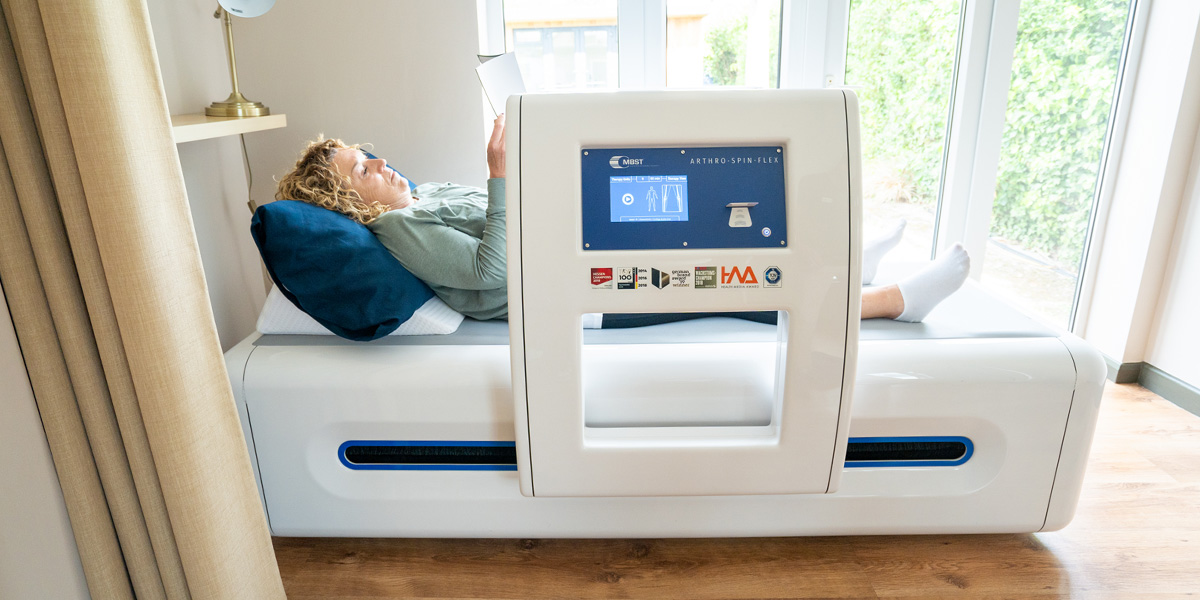
For some suitable patients, the clinical team may recommend combining Spinal Decompression with MBST Therapy as part of a personalised treatment programme.
The two treatments take different approaches:
• Spinal Decompression applies carefully controlled decompression and mobilisation to a targeted area of the spine.
• MBST Therapy uses therapeutic magnetic resonance technology and may be considered as part of the management of certain musculoskeletal and degenerative conditions.
Where clinically appropriate, these treatments may be used alongside one another to provide a broader approach to managing disc-related pain, restricted movement and associated symptoms.
This does not mean that every patient will require both treatments. Your practitioner will consider your symptoms, examination findings, medical history, available imaging and response to care before making any recommendation.
Your programme may also include rehabilitation exercises, physiotherapy, osteopathy, chiropractic, movement advice or other appropriate support.
Book Your Spinal Decompression Therapy Suitability Call
CONTACT OUR CLINIC
Clinic Hours:
Monday 08:00 – 20:00
Tuesday 08:00 – 19:30
Wednesday 08:00 – 16:00
Thursday 08:00 – 20:00
Friday 08:00 – 15:00
Saturday 08:00 – 13:00
VITAL Health
6 Station Road, Tiptree,
Essex, CO5 0AD
OUR CLINIC
Our Tiptree Spine & Disc Centre
Contact the clinic
Spinal Decompression FAQs – Tiptree
Here are some answers to common questions we get asked
What is spinal decompression therapy?
Spinal decompression therapy is a non-surgical treatment that uses a specialist table to apply carefully controlled forces to targeted areas of the spine. At VITAL Health, we use the Spine MT ATLAS system, which can combine decompression with selected mobilisation and positioning.
Can spinal decompression help a slipped disc?
Spinal decompression may be considered for some people whose symptoms are associated with a bulging, herniated or prolapsed disc. A slipped disc diagnosis alone does not confirm that treatment will be appropriate. Your symptoms, examination findings, health history and any available imaging must also be considered.
Can ATLAS spinal decompression help sciatica?
It may be considered when sciatic symptoms are associated with irritation or compression of a spinal nerve. Because sciatica has several possible causes, an assessment is required before treatment can be recommended.
Can spinal decompression be used for neck pain?
The ATLAS system can provide cervical as well as lower-back decompression. It may be considered for certain types of neck pain, particularly when symptoms are associated with a cervical disc or irritation of a nerve travelling into the arm.
Is spinal decompression painful?
Treatment is designed to be gentle, progressive and controlled. Many people find the experience comfortable, but this can vary. Treatment settings are adjusted according to your tolerance and response.
Is spinal decompression the same as traction?
No. Traditional traction usually provides a more general pulling force. ATLAS allows greater control over the treatment angle, force, positioning, mobilisation and spinal region being addressed.
Do I need an MRI scan?
Not everyone needs an MRI before contacting us. When relevant imaging is already available, it can provide useful information during your assessment. Your practitioner will advise you if further investigation is needed.
How many sessions will I need?
This depends on your condition, symptoms, examination findings, goals and response. Spinal decompression is generally provided as a structured course rather than being presented as a guaranteed one-session solution.
Can spinal decompression prevent surgery?
Spinal decompression is a conservative treatment option that may be considered in suitable cases. We cannot promise that it will prevent surgery. People with significant or progressive neurological symptoms may require medical or surgical assessment.
Is treatment suitable after spinal surgery?
It depends on the type of surgery, how recently it was performed, the stability of the spine and whether hardware is present. Medical clearance or further investigation may be required.
What happens during the free suitability call?
A member of our team will ask about your symptoms, diagnosis, investigations and previous treatment. The call helps determine whether an in-clinic assessment may be appropriate. It does not replace a clinical examination or provide a formal diagnosis.
Where is spinal decompression available in Tiptree?
Treatment is available at VITAL Health, 6 Station Road, Tiptree, Essex, CO5 0AD.